
Grayson Magistrates Review Probable Cause for Arrest Warrants
Every Texas arrest starts on paper. Someone files a sworn complaint or affidavit, and a magistrate reads it to decide whether probable cause exists. If it does, the magistrate signs an order telling a peace officer to take the accused into custody. Grayson County JP1 lists both probable-cause determinations and arrest-warrant issuance among its magistrate duties. Municipal judges sit as magistrates too. A bench warrant works differently: it comes after a missed court date. The issuing court and the case level decide where the record sits and which office can recall the order.
Grayson County Arrest Warrants Explained
An arrest warrant is a written magistrate order that lets a peace officer take someone into custody. The paper trail runs from a sworn complaint or affidavit through a probable-cause review to a signed order. A felony case file lands with the District Clerk. A Class C or city case stays with the JP or municipal court involved. Some warrant papers stay sealed or withheld while an investigation is open. The public Sheriff page does not list every arrest warrant.
Three Grayson County District Courts Hold Felony Files
Felony matters go to the 15th, 59th, and 397th District Courts, with the District Clerk keeping the criminal filings. All three sit at the Justice Center, 200 S. Crockett in Sherman. Court coordinators and clerk staff can trace a case route. Contact the court tied to the cause number rather than sending a general query to a different county court. To search, the District Clerk asks for a cause number, defendant name and birth date, offense type, disposition year, and selected documents. That request locates a file. It is not a public warrant list.
Inside a Grayson County Arrest Warrant
Grayson County publishes no standardized warrant-number format or live result schema. A warrant or its court file may name the person and charge, the issuing magistrate, the cause, the date, bond terms, and the office assigned to serve it. Ask the clerk to explain each field and whether the order remains active.
| Warrant / cause number | Ask the District Clerk or issuing court; no shared county format was found. |
|---|---|
| Person and charge | Name and offense details used to identify the case; confirm any same-name match with the clerk. |
| Issuing magistrate | The judge or magistrate who signed the process and the court controlling the case. |
| Bond / bail | Case-specific terms, if set; Grayson County publishes no universal bond schedule. |
| Date and status | Issue date plus current service, recall, or return information from the court or serving office. |
Sheriff, Constable, City Police, or Marshal in Grayson County?
The Sheriff's Office serves criminal and civil process, including warrants and capias. Four elected constables serve process within their own authority. City police may execute city or other lawful warrants, and Denison's City Marshal operates as an independent law-enforcement agency tied to municipal-court security and process. Who serves a particular warrant depends on its assignment, and the county pages post no case-by-case roster. Ask the issuing court which agency holds the order before any personal visit. Denison explains its marshal's specific municipal role. Read the official City Marshal description.
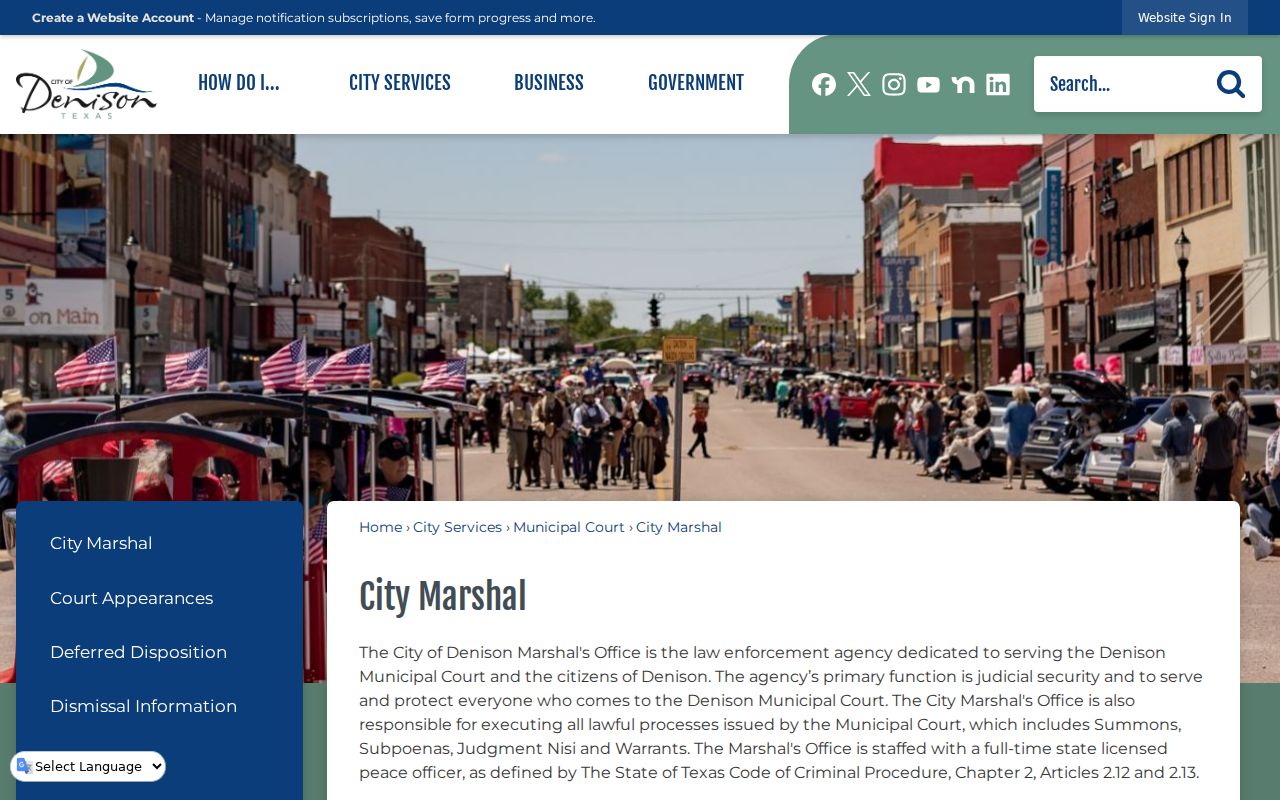
The marshal serves Denison court process and is separate from Denison Police Department.
Serving Arrest Warrants in Grayson County
After an officer executes a warrant, booking and magistration follow. A judge or magistrate sets bail and release conditions as required, and the case returns to the issuing court. Grayson County posts no universal walk-in surrender policy, bond schedule, or bond-window hours. Do not assume where or when to appear. Texas VINE sends custody and court-event notifications by phone at 1-877-894-8463 or through VINELink. It helps after an arrest. It is not a warrant lookup or a substitute for the court's status.
Grayson County Does Not Publish a Countywide Bond Schedule
Grayson County publishes no countywide bond table, standard bond amount, or separate 24-hour bond counter. The District Clerk fee sheet's charge for approving a bond is a clerk fee, not the person's bond. Sheriff and constable service fees are not bond amounts either. Ask the issuing court or jail contact for the case-specific bond type, amount, and authorized payment location. A surety or personal bond may be available only if the court authorizes it. Posting bond generally addresses release. It does not dismiss the underlying charge.
Comparing Arrest, Summons, and Bench Warrants
An arrest warrant follows probable-cause review. A summons directs someone to appear without immediate arrest. A bench warrant answers a missed court obligation, while a capias pro fine enforces a fine judgment. The clerk can explain which process appears in the case and which response the issuing judge requires.
| Feature | Arrest Warrant | Summons | Bench Warrant |
|---|---|---|---|
| What It Orders | Officer to take accused into custody | Person to appear at a stated time | Appearance or custody after noncompliance |
| Basis | Probable cause for an alleged offense | Filed case and appearance direction | Missed date or violated court order |
| Who Issues It | Magistrate or judge | Court under the applicable process | Judge of the court holding the case |
| How to Respond | Ask counsel and court about surrender and bond | Attend as directed | Ask the court about reset or recall |
Federal Warrants Follow a Separate Sherman Division Route
Grayson County sits in the Sherman Division of the U.S. District Court for the Eastern District of Texas. Federal warrants never sit in the local county court system. PACER opens federal dockets, but sealed complaints or warrant papers may stay hidden, and PACER is not a federal warrant roster.
Federal building entry: The Paul Brown courthouse's photo-ID and device rules apply to visits, not to a warrant search or resolution.
The federal court lists Sherman Division information. Check the Eastern District's official court directory.
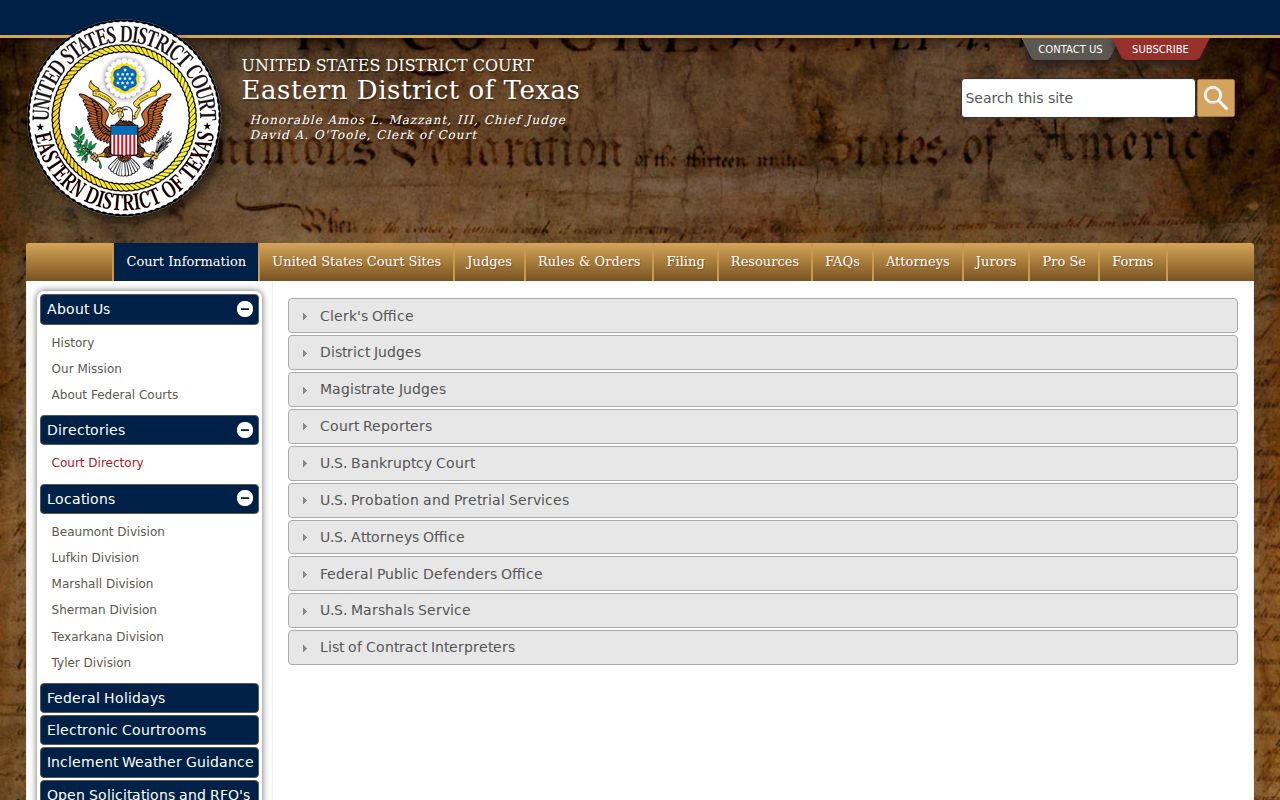
Federal process is different. A U.S. Marshal, not the Grayson County Sheriff, handles federal warrants out of the Sherman Division. Review the official courthouse visitor information for photo ID and entry rules at the Paul Brown Courthouse.
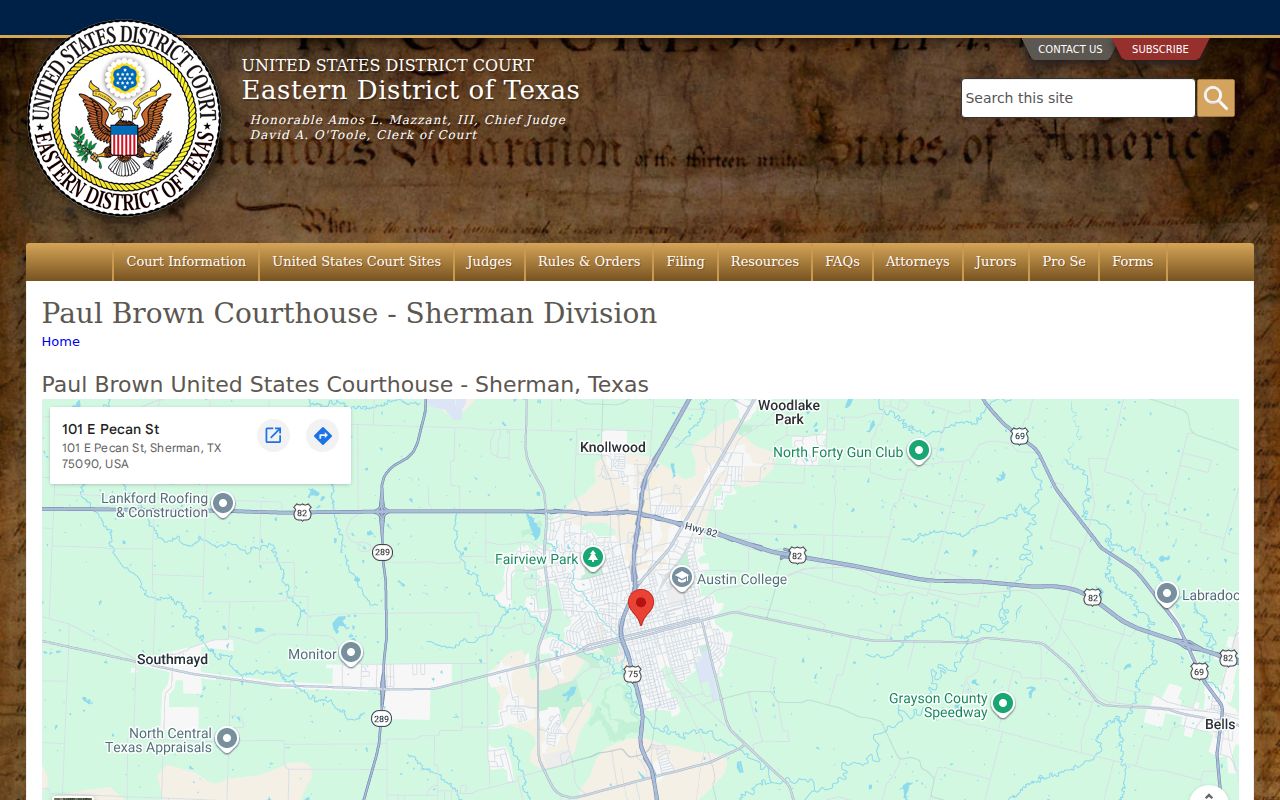
Those entry rules apply to courthouse visits, not warrant searches.
If There's an Arrest Warrant for You
Got word that a Grayson County warrant carries your name? Call the issuing court and a lawyer first. Ask whether the warrant is still active, which agency holds it, and whether a bond amount has been set. An attorney can also ask about a scheduled surrender, posting bond, or a motion to recall or quash. The sheriff's page offers no universal walk-through, so confirm details yourself. After an arrest, VINE may send custody updates, though the court still controls the case and any future date. The county resolution steps show how to reach the right office.
Important: Speak with counsel before appearing; ask the issuing court about bond, booking location, and the method for confirming a recall.